nonlinearity, why it makes sense to think big
Thinking big has been vastly talked about from the "attitude" perspective. However, what fascinates me are some physical observations that show it actually makes sense to have big…
Note (2026): This is the closest thing to a thesis I have for this blog, so I’m happy to have it as the front-door essay. I’ve edited it for clarity and added a few concrete examples; the argument hasn’t changed.
Thinking big is usually sold as an attitude — be ambitious, dream larger, push harder. What actually convinced me of it, years ago, was not a motivational poster but a set of observations from physics and statistics: most of the systems we live inside are nonlinear, and once you start noticing that, “think big” stops being a slogan and starts being a straightforward consequence of how the world works.
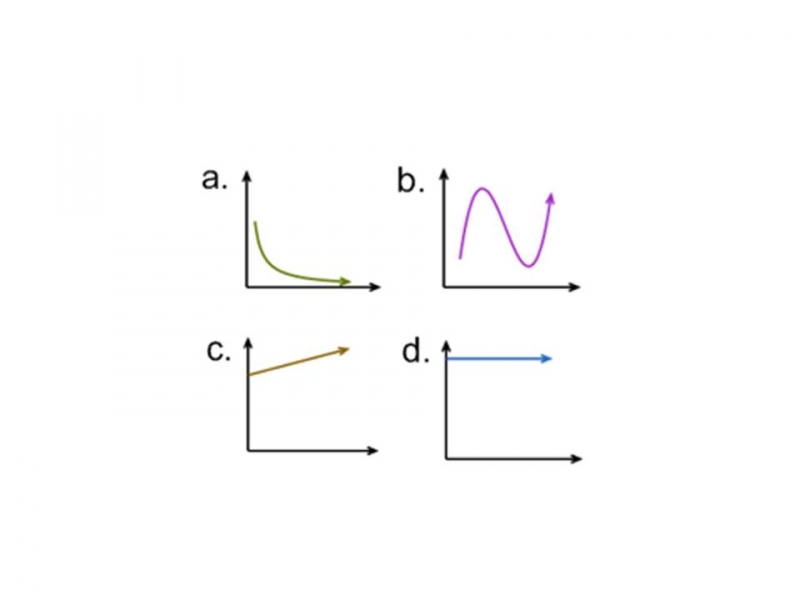
A nonlinear system is one where the output is not directly proportional to the input. Double the effort, and you might get ten times the result — or almost none. Most of the interesting outcomes in life live far away from the middle of that curve.
Once you look for it, nonlinearity is almost everywhere:
- Income and wealth follow a Pareto distribution — a small fraction of people hold most of the total.
- City sizes, word frequencies, and citation counts follow power laws (Zipf).
- Compound interest quietly turns small sustained deposits into outsized balances over decades.
- Neural networks get disproportionately better as you scale parameters, data, and compute together — the scaling laws that shaped the last decade of AI.
- Viral content and open-source projects follow winner-takes-most dynamics: most die quietly, a few eat the world.
- Software bugs and security incidents: a small number of them account for most of the damage.
The common thread is that effort-to-outcome is not a straight line. Some work compounds. Some work distributes. Some work unlocks an asymmetric payoff. And a lot of work does none of those things — it just cancels out noise.
The practical question, then, isn’t “how much can I work?” — it’s “what kind of work sits on the steep part of the curve?” A few heuristics I keep coming back to:
- Does this compound? Will tomorrow’s version be built on top of today’s, or will I be starting from scratch again?
- Does this distribute? Can one unit of effort reach ten people, a thousand, a million?
- Is the payoff asymmetric? Small downside, large upside — a classic option.
- Am I solving a rare problem or a common one? Rare problems concentrate payoff; common ones concentrate competition.
None of this is a recipe for success. But it does make “think big” feel less like a pep talk and more like a reasonable response to the shape of the world. If the system is nonlinear, then the biggest outcomes don’t cost proportionally more effort — they cost different effort. And if you’re going to pick something to spend years on, you might as well pick something that sits on a steep part of the curve.